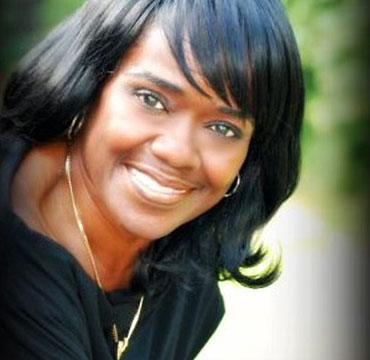


Speakers – Law Enforcement
As Minnijean likes to say, “Ordinary people can do extraordinary things.”
Key to the living-history component of the Sojourn experience are the speakers, the ordinary people, who offer unique historical insights about key events of the Civil Rights Movement based on their personal experiences. At each location we visit, participants conduct in-depth studies of their stories before meeting and interviewing the speakers. We are so fortunate to have them!
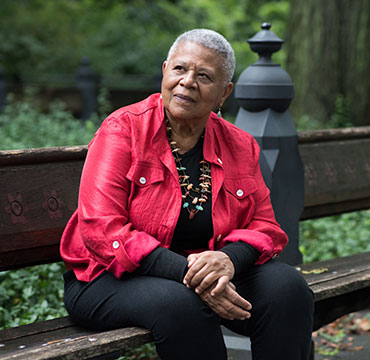
Minnijean Brown-Trickey
She is famously a member of the “Little Rock Nine,” but to us she is also the “Queen of Sojourn” and has traveled on nearly every Sojourn journey. She has dedicated her life to peacemaking, environmental justice, developing youth leadership, diversity education and training, cross-cultural communication, and gender and social justice advocacy. Under the Clinton Administration, she served as Deputy Assistant Secretary for Workforce Diversity at the Department of the Interior, and also has taught numerous university courses on social work and cross-cultural communication.
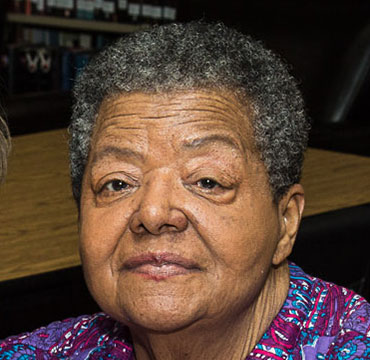
Elizabeth Eckford
Ms. Eckford is another member of the “Little Rock Nine.” She attended Central High School from September 1957 until Governor Oral Faubus closed all schools in Little Rock in another attempt to prevent desegregation. She then moved to St. Louis, Missouri, where she finished her high school education. Elizabeth later participated in the famed March on Washington in 1963, and joined the U.S. Army in 1967. She now lives in Little Rock and works as a probation officer. She meets every Sojourn group and recounts her experiences with prejudice and the toll it took on her life; she is quick to emphasize the power of kindness and how young people can make a difference in one another’s lives.
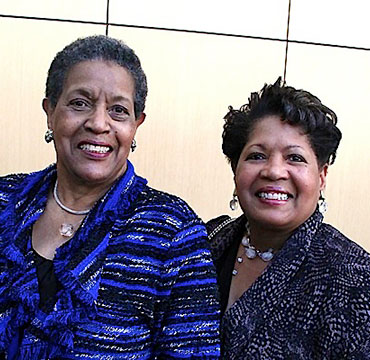
The Evers Family
Myrlie Evers-Williams is the widow of slain civil rights leader Medgar Evers. After witnessing his murder, she struggled for many decades to get justice. Throughout her life, she has dedicated her activism to the fight for civil rights and equality. She was the first Chairwoman of the NAACP. Most recently she gave a powerful keynote address at the opening of the Mississippi Civil Rights Museum, and contributed op-eds to national newspapers about the current fight for equality. Reena Evers has worked for decades as a communications representative with domestic and international entities. She is a frequent speaker at conferences and conventions, and has served on numerous organization boards and committees to advance equity and justice. She serves as the Executive Director for the Medgar and Myrlie Evers Institute, motivated by her father’s words: “Although great strides in the field of human relations have been made, we cannot let up now!”
On January 21, 2013, Evers-Williams delivered the invocation at the second inauguration of Barack Obama. She was the first woman and the first layperson to deliver the invocation at a presidential inauguration.
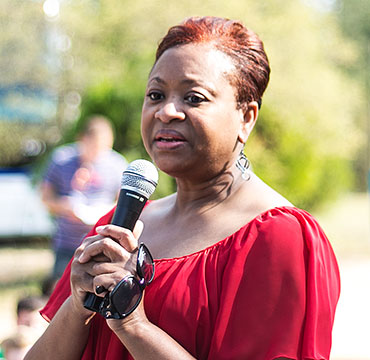
Angela Lewis
Angela Lewis’ father James Chaney was born May 30, 1943 in Meridian, Mississippi to Ben and Fannie Lee Chaney. In 1963, he joined the Congress of Racial Equality (CORE). In 1964, CORE led a massive voter registration and desegregation campaign in Mississippi called Freedom Summer. As part of the Freedom Summer activities, Chaney was riding with two white activists when they were attacked and killed by the Ku Klux Klan on June 21, 1964. After numerous attempts, the family finally received a small measure of justice in 2005 when Edgar Ray Killen was found guilty of manslaughter and sentenced to 60 years in prison. Ms. Lewis was just 10 days old when her father’s life was taken. She recounts her father’s activism from a young age and delivers an inspirational message about how young people can transform their communities.
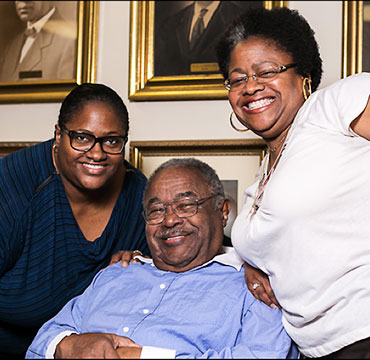
The McNair Family
On September 15, 1963, the Sixteenth Street Baptist Church in Birmingham, Alabama was bombed in a terrorist attack by white racists who opposed desegregation. Sunday school pupils Addie Mae Collins (14), Carole Robertson (14), Carole Robertson (14), and Denise McNair (11) were killed. The McNair family recounts the story of their daughter’s death, as well as the public environment at the time of the bombing. Despite their devastating loss, they believe that “hatred only destroys the hater” and so they emphasize empathy and creating positive and inclusive communities.
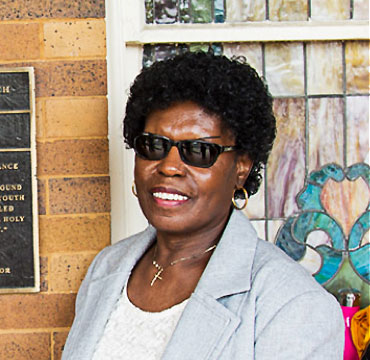
Sarah Collins
Sarah was the fifth little girl in the Sixteenth Street Baptist Church Bombing in Birmingham. At age 9 she was the only one to survive. Her sister Addie Mae, along with Denise McNair, Cynthia Wesley, and Carole Robertson were murdered that day by a bomb planted specifically in retaliation for the Children’s March that had occurred the previous spring. Sarah meets us in the Church’s sanctuary to share her story, and how she overcame the hatred she felt in the wake of the bombing.